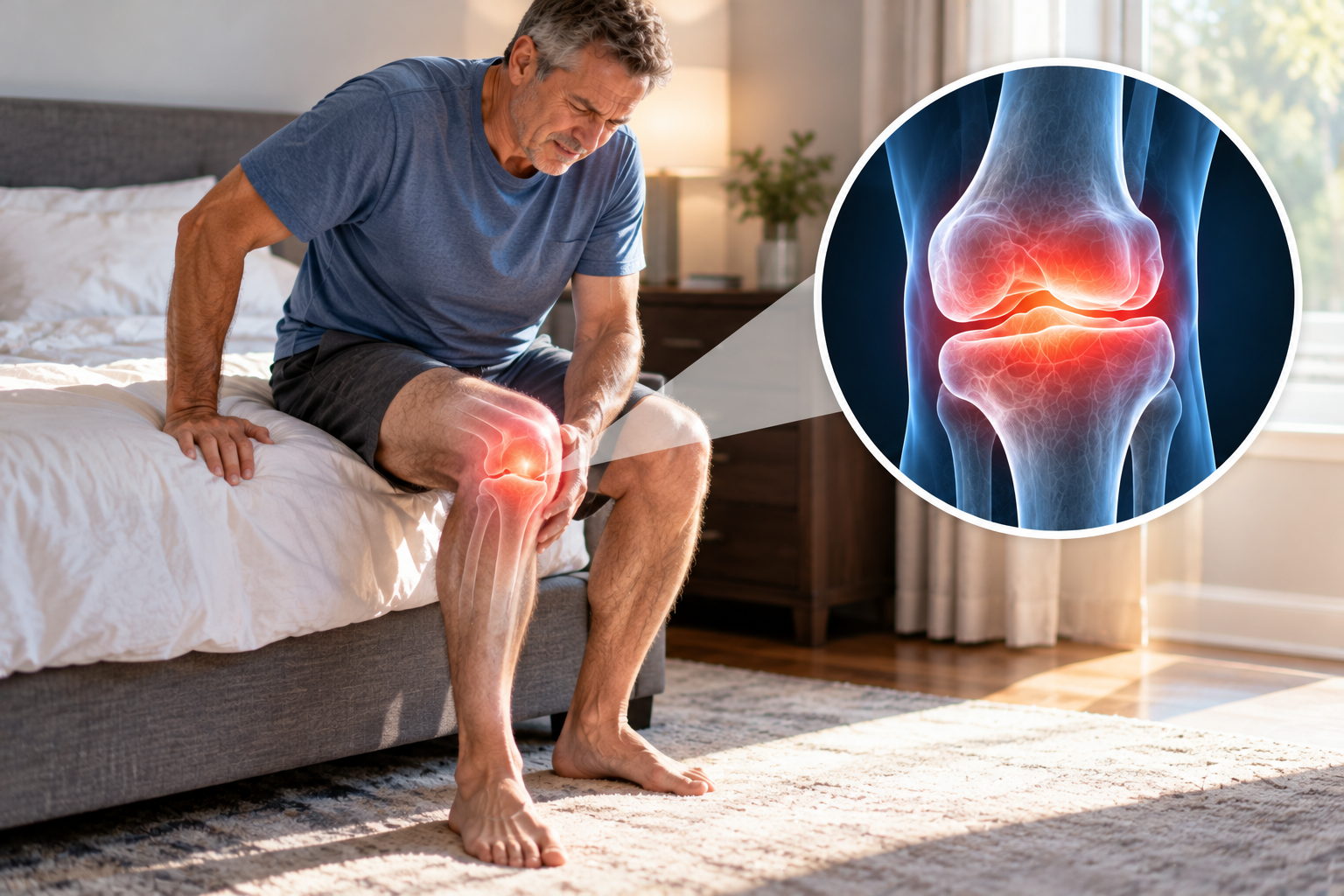
If you have arthritis, you’ve probably said it before:
“My knees can feel the weather changing.”
So is that just a myth or is there something real happening?
The short answer:
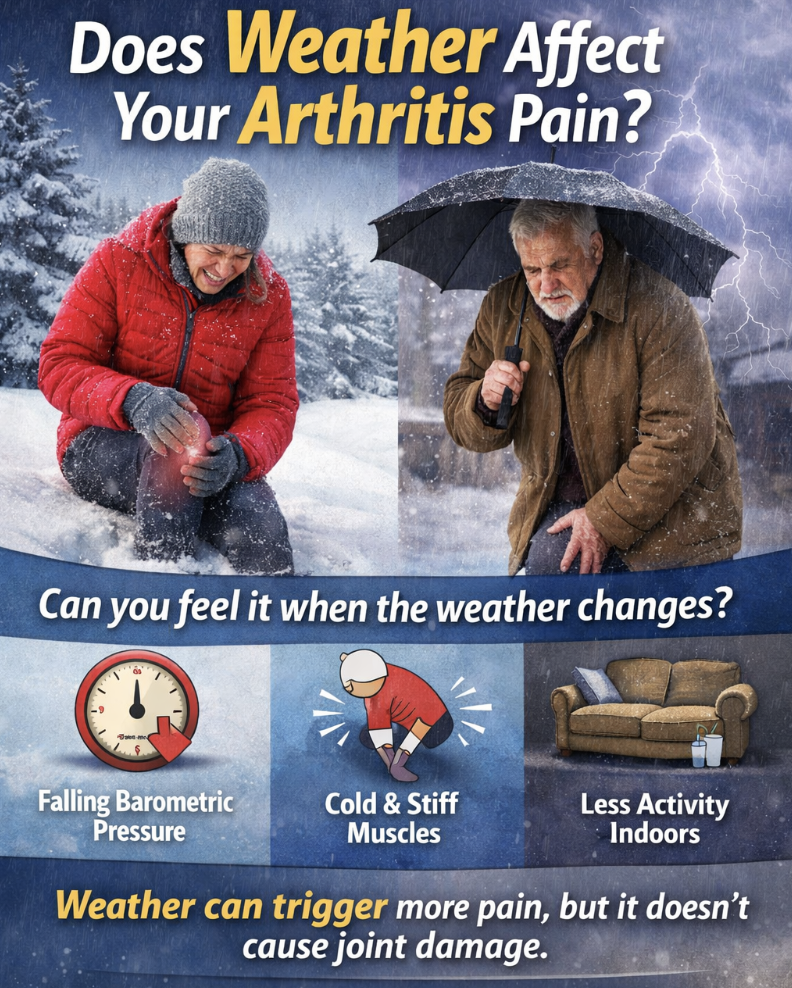
Weather can influence joint pain for many people.
But not for the reasons most assume.
Several factors may play a role:
When air pressure drops (often before storms), tissues inside the joint may expand slightly.
In an already inflamed joint, even small changes can increase sensitivity.
Cold temperatures cause muscles and tendons to tighten.
Less flexibility around the knee can increase stiffness and discomfort.
In winter, people often move less.
Less movement means:
Sometimes it’s not just the weather it’s the change in routine.
No.
Cold weather does not accelerate cartilage loss or “wear out” joints faster.
It may increase symptom sensitivity, but it doesn’t speed up structural deterioration.
Pain perception varies based on:
That’s why some people barely notice weather changes while others feel it immediately.
Yes, weather can affect arthritis symptoms.
But increased pain during cold or damp conditions does not automatically mean your joint is worsening.
If seasonal flare-ups are becoming more frequent or limiting activity, it may be time to understand what’s driving inflammation.
At Buffalo Arthritis & Joint Pain Center, we help patients explore non-surgical options designed to reduce inflammation and improve joint function year-round.
👉 Weather may influence pain but it doesn’t control your future.