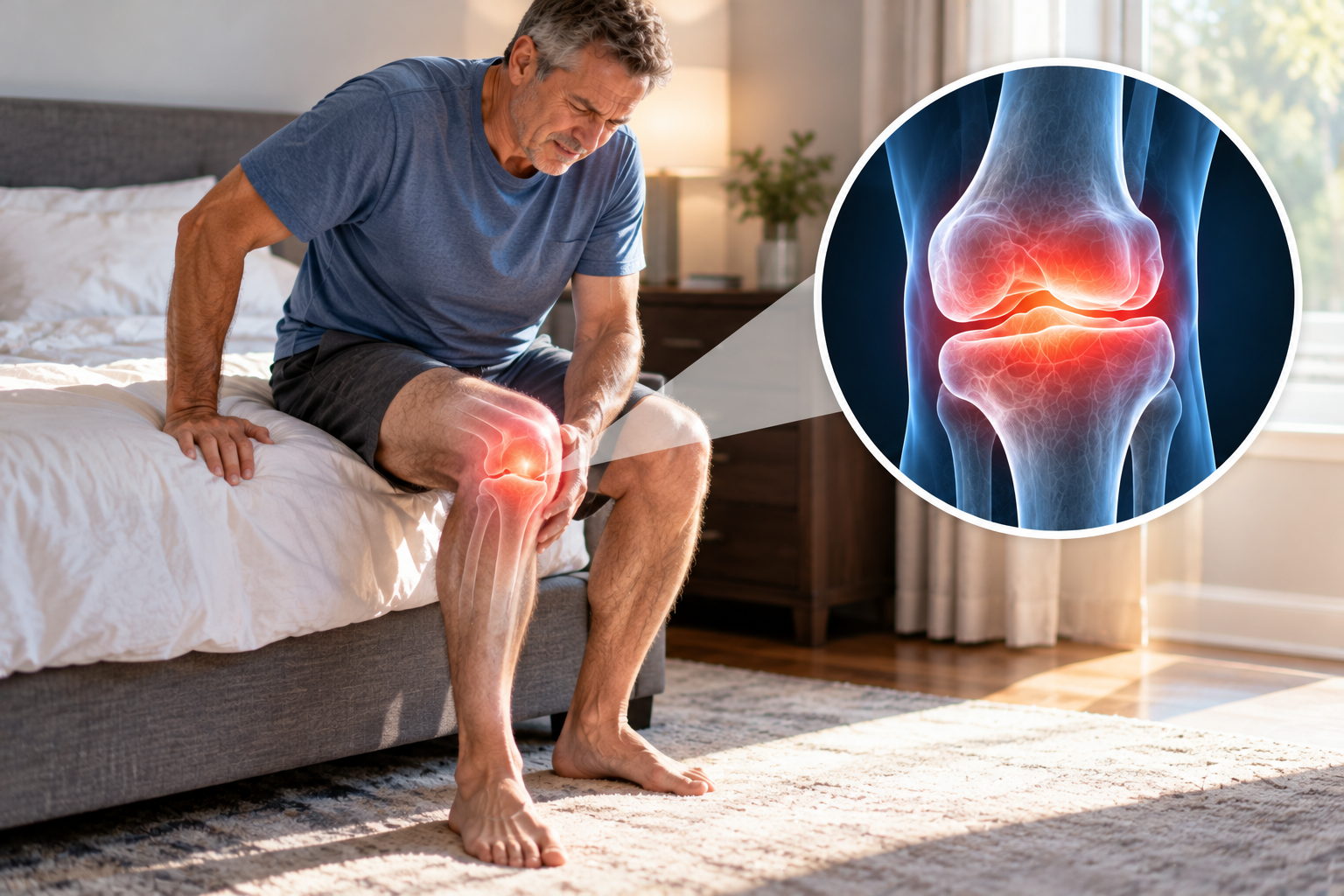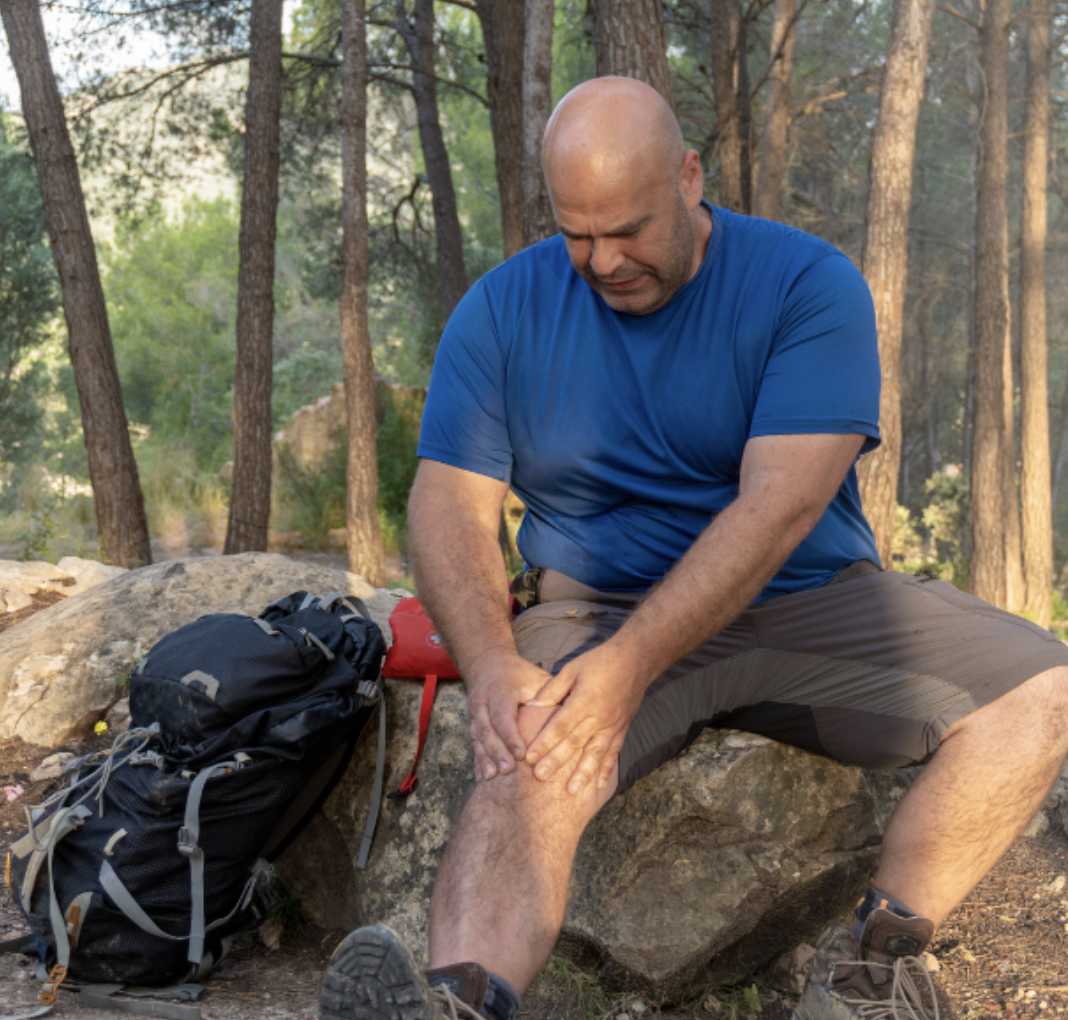
Many people with knee pain notice something interesting.
Walking on flat ground feels manageable.
Going uphill may feel challenging but doable.
But walking downhill?
That’s often when the knee really starts to hurt.
So why does this happen?
When walking downhill, your knee must control your body weight with each step.
Instead of simply supporting weight, the joint must slow your body down.
This creates significantly more pressure inside the knee joint compared to flat walking.
Your quadriceps muscles help stabilize the knee when descending.
They work eccentrically, meaning they lengthen while controlling movement.
If those muscles are weak or fatigued, the knee joint absorbs more stress.
That can increase discomfort.
For people with arthritis:
When downhill forces increase, the joint becomes more sensitive.
That’s why downhill walking often triggers symptoms first.
Descending stairs creates a similar effect.
The knee must slow body weight while bending deeply.
This combination of load and control increases joint stress.
Some simple adjustments may help:
• Take shorter steps downhill
• Use handrails when available
• Strengthen quadriceps and hip muscles
• Wear supportive footwear
Small changes can significantly reduce knee strain.
Downhill walking often feels harder on arthritic knees because the joint must control body weight with every step.
If slopes, hills, or stairs are becoming increasingly painful, it may signal inflammation or reduced joint support.
At Buffalo Arthritis & Joint Pain Center, we help patients explore non-surgical options designed to improve mobility and reduce knee pain so everyday activities feel easier.
👉 Hills shouldn’t stop you from staying active.