Have you ever wondered:
👉 “Why is only ONE foot numb?”
If it were circulation, wouldn't both feet be affected?
If it were aging, wouldn't it happen equally?
Not necessarily.
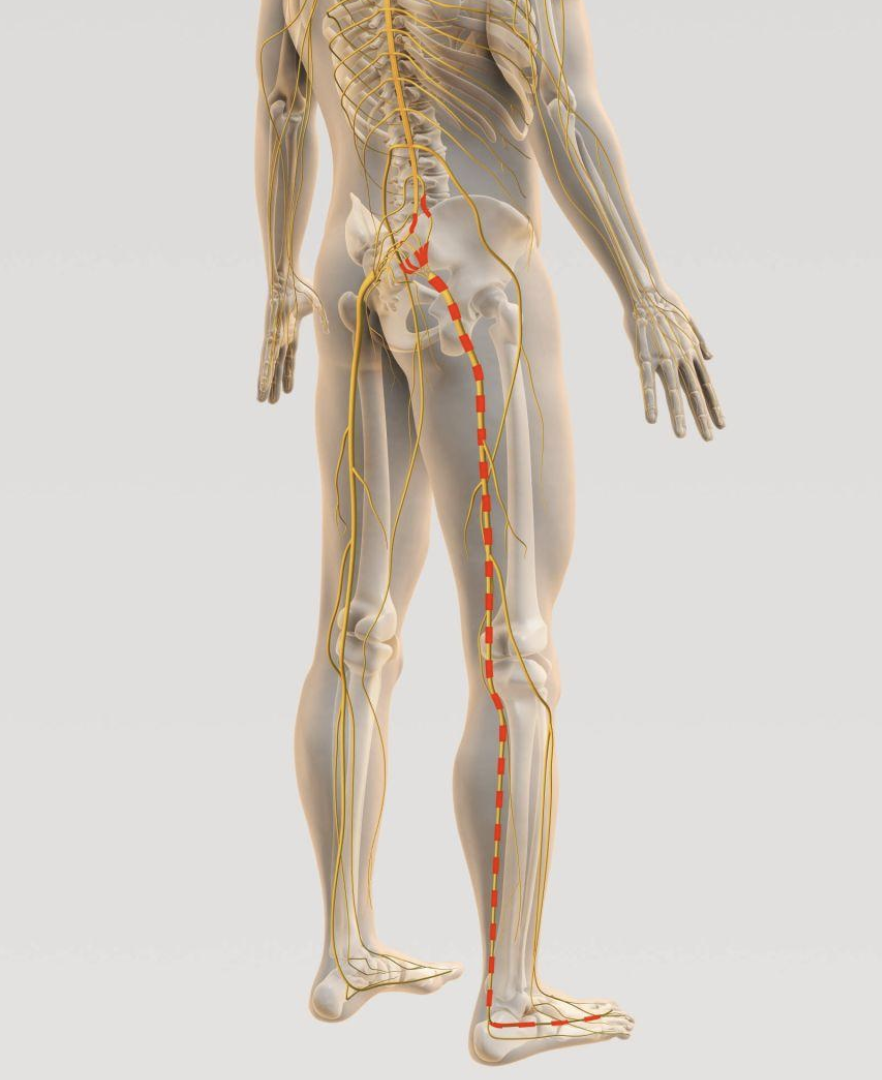
In many cases, numbness in just one foot points to irritation somewhere along a specific nerve pathway.
Your nerves branch out like roads.
Different nerves supply:
When one nerve becomes irritated:
👉 Symptoms often appear on only ONE side.
The sciatic nerve typically affects:
👉 One leg more than the other.
When irritated:
Often affecting:
Many people notice:
🚗 Driving triggers symptoms
🛋 Sitting increases numbness
This happens because sitting can:
One day:
👉 The foot feels numb
Another day:
👉 The calf tingles
Another day:
👉 The buttock aches
That's very common with nerve irritation.
Movement can:
✅ Improve circulation
✅ Reduce stiffness
✅ Change pressure on the nerve
✅ Activate surrounding muscles
That's why many people feel relief once they get moving.
If numbness:
🚩 Is becoming more frequent
🚩 Includes weakness
🚩 Affects balance
🚩 Causes stumbling or tripping
…it may be time to understand what's driving it.
Numbness is often a signal that:
👉 A nerve is being irritated somewhere along its pathway.
The foot may be where you feel it...
But the source may be:
When only one foot goes numb, the cause is often related to nerve irritation affecting a specific pathway, not necessarily the foot itself.
Understanding where the symptoms start is key to identifying the source.
At Buffalo Arthritis & Joint Pain Center, we help patients explore non-surgical options designed to improve mobility and reduce nerve-related symptoms.
👉 Sometimes the symptom is in the foot, but the problem starts much higher up.