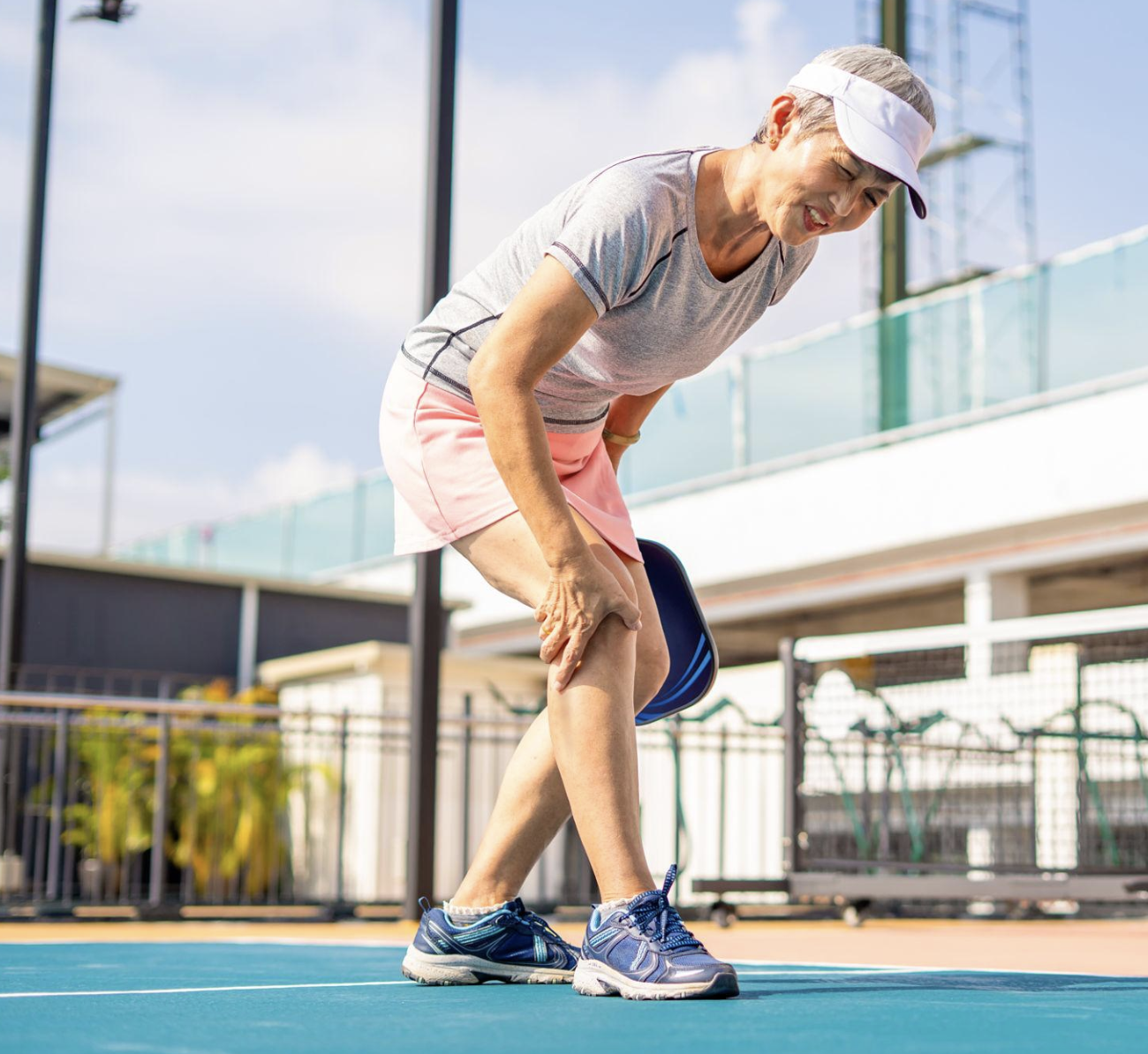
You finish a great game of pickleball.
During the match...
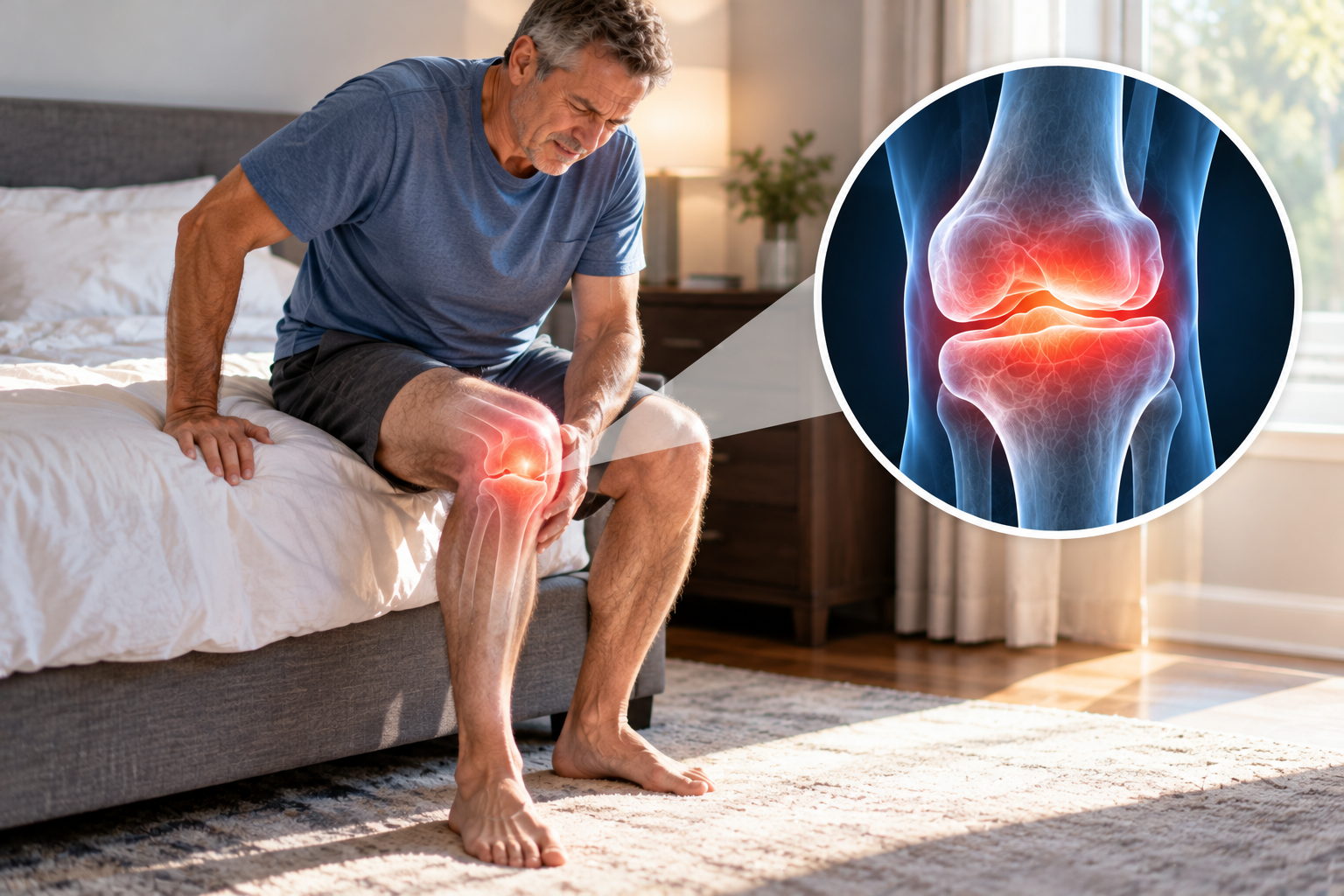
👉 Your knee felt fine.
But later that evening or the next morning...
😣 It aches.
😣 It's stiff.
😣 Walking downstairs suddenly hurts.
Sound familiar?
You're not alone.
When you're active:
That's why many people feel surprisingly good during the game.
After you stop playing:
For some people, the discomfort doesn't begin until hours later.
Pickleball involves repeated:
🏃 Starts and stops
↔️ Side-to-side movement
🦵 Lunges
🔄 Twisting
Even if each movement feels small, they add up over the course of a game.
If you already have knee arthritis or chronic joint irritation, your knee may recover more slowly after activity.
You might notice:
Not necessarily.
Staying active is one of the best things many people can do for their overall health.
But if your knee hurts every time you play or the pain is getting worse, it may be worth finding out why.
Playing through persistent pain without understanding the cause isn't always the best long-term strategy.
Consider having your knee evaluated if:
🚩 Pain lasts several days after playing
🚩 Swelling continues to return
🚩 Your knee feels unstable
🚩 You're playing less because of pain
Knee pain that appears after pickleball is common because your body often responds to activity once the game is over.
Understanding why your knee hurts can help you make informed decisions about staying active.
At Buffalo Arthritis & Joint Pain Center, we help patients explore non-surgical options designed to reduce knee pain, improve mobility, and keep them doing the activities they enjoy.
👉 The goal isn't to quit pickleball, it's to keep enjoying it.