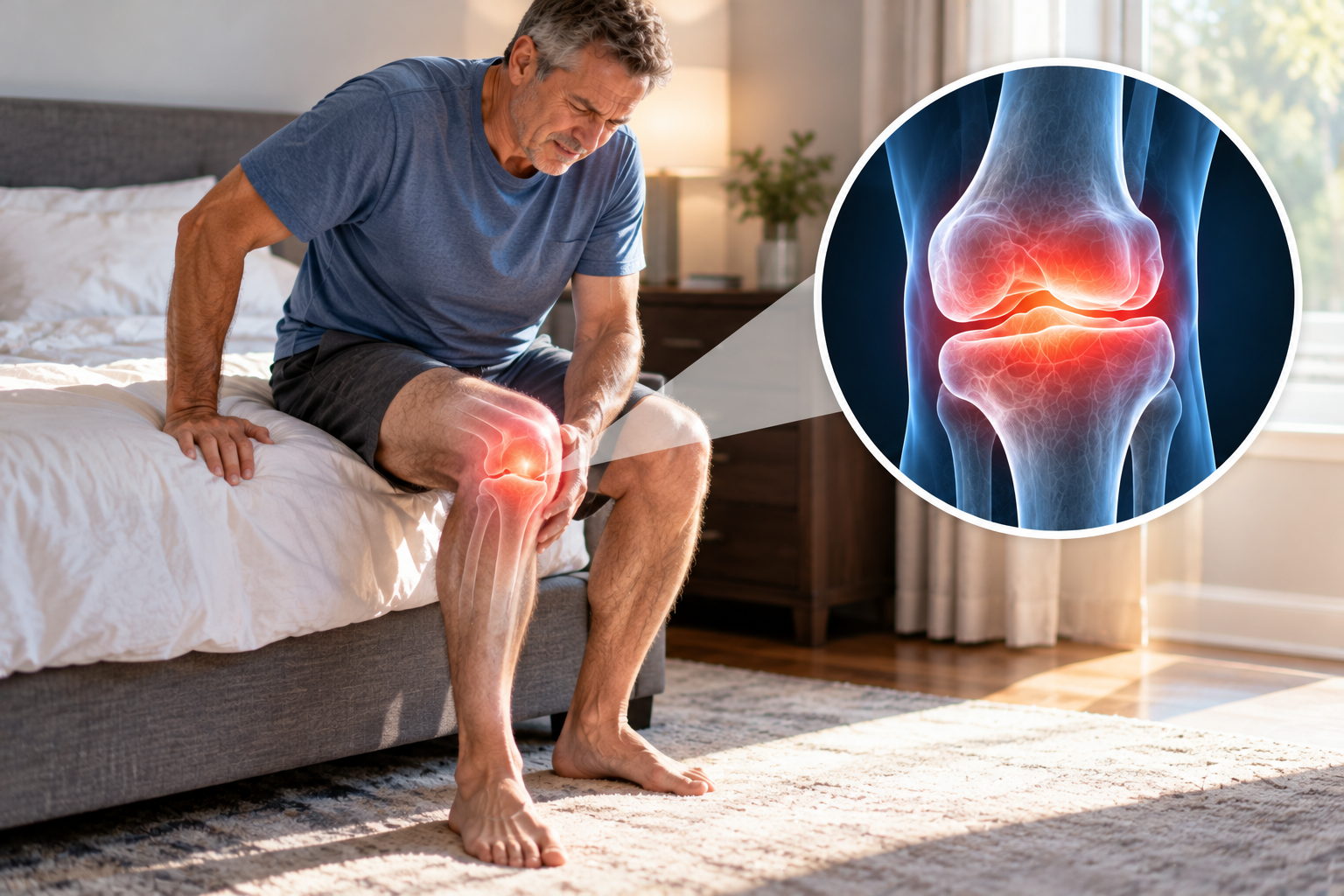
If your hip feels stiff, tight, or painful when you rise from a chair, car, couch, or bed, you're not alone.
Hip pain during transitions is one of the earliest warning signs of joint inflammation and mobility problems in adults over 50.
Standing up requires the hip joint to shift from a bent to a weight-bearing position. If anything inside the hip is irritated, inflamed, or stiff, that first movement becomes painful.
When cartilage wears down, the hip joint becomes irritated.
Standing up triggers:
Pain often improves slightly once you start walking.
Sitting shortens the hip flexors.
When you stand, these tight muscles pull on the hip joint, causing sharp or tight pain.
This is extremely common in:
Inflamed bursae around the hip become sensitive after sitting.
Pain may feel like:
Weak glute muscles make it difficult for the hip to stabilize when you rise.
The joint takes the load — and pain follows.
Sitting reduces circulation.
This allows inflammation to thicken fluid inside the hip, causing:
Sometimes the hip hurts even though the problem is coming from the low back or pelvis.
Nearly every patient describes the same experience:
“It’s stiff and painful when I stand, but after I walk a bit, it loosens.”
That’s because movement:
This pattern is one of the strongest indicators of underlying inflammation.
You may notice:
These symptoms indicate a joint that needs care, not rest.
They help temporarily, but they do not address:
This is why the problem always returns after sitting.
Our treatments help:
Most patients report:
All without surgery, cortisone, or downtime.
✔ Do gentle hip movements before standing
✔ Stretch hip flexors daily
✔ Strengthen glutes with simple exercises
✔ Sit with hips higher than knees
✔ Stand slowly and with control
✔ Avoid sitting for long periods without breaks
These small adjustments help protect the hip joint.
Hip pain during transitions is not something you have to “live with.”
It’s a sign your hip needs support and early treatment works best.