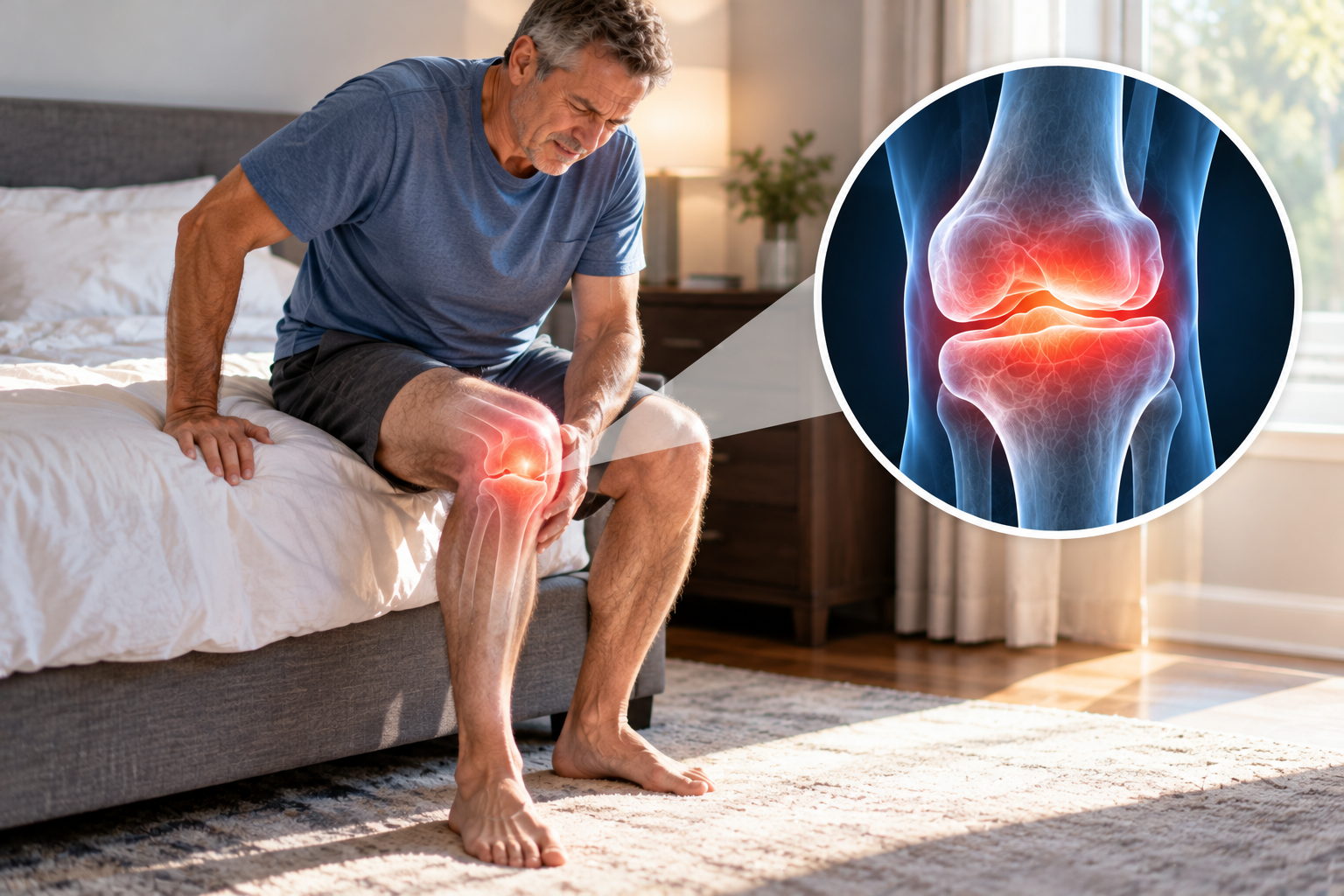
If going down the stairs triggers sharp, aching, or grinding pain in your knee especially behind the kneecap you’re not alone.
Descending stairs puts 6–8 times your body weight through the knee joint.
That is more stress than:
This is why knee problems “show up” going down stairs first.
The kneecap must glide smoothly in its groove.
If there’s inflammation, tightness, or misalignment, descending stairs creates friction causing sharp pain.
Common symptoms:
When cartilage thins, stairs reveal the problem quickly.
Less cushioning = more pressure = more pain.
The meniscus absorbs shock.
If it’s irritated or worn, the twisting pressure of descending stairs increases discomfort.
Weak thigh muscles make the knee work harder and increase pain during controlled movements like descending.
Inflammation reduces mobility and increases pressure behind the knee.
Going down stairs exposes that sensitivity.
Tight muscles pull on the knee joint, especially when stepping down.
Going down stairs requires:
If even one of these is off, pain increases dramatically.
This is why many people say:
“Going down hurts way more than going up.”
You should not ignore pain if you notice:
These symptoms indicate inflammation or degeneration that will worsen without treatment.
They temporarily ease symptoms but do not fix:
Real improvement requires treating the root cause.
Our non-surgical treatments help:
Patients often see:
All without surgery or cortisone.
✔ Strengthen quadriceps (straight-leg raises are great)
✔ Stretch calves and hamstrings
✔ Take stairs slowly
✔ Use the railing for support
✔ Ice after long activity
✔ Avoid deep squatting
These habits reduce irritation and protect the knee.
Knee pain on stairs is a sign your joint needs attention — and the sooner you address it, the easier it is to fix.
👉 Schedule your consultation today:
www.painreliefbajc.com