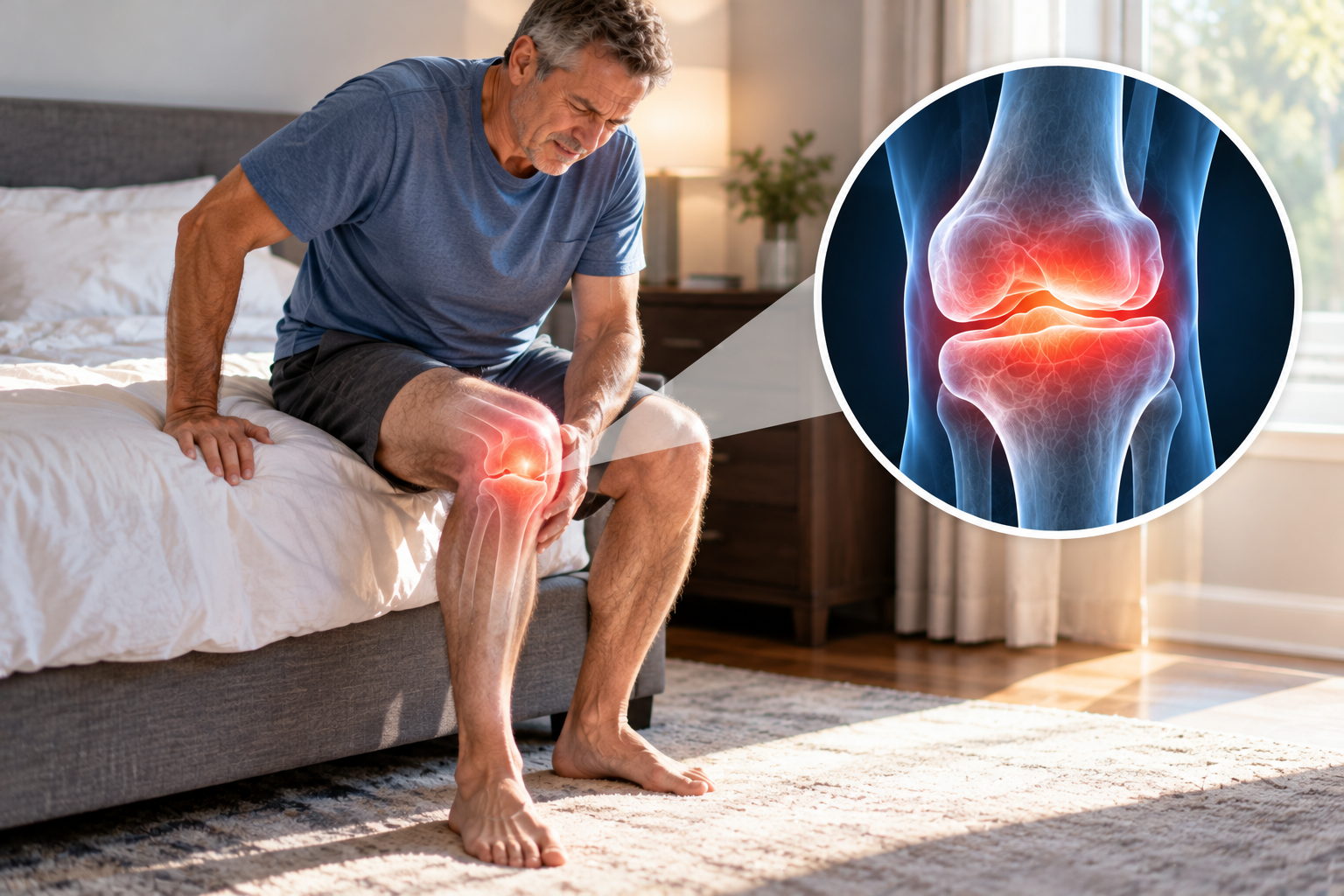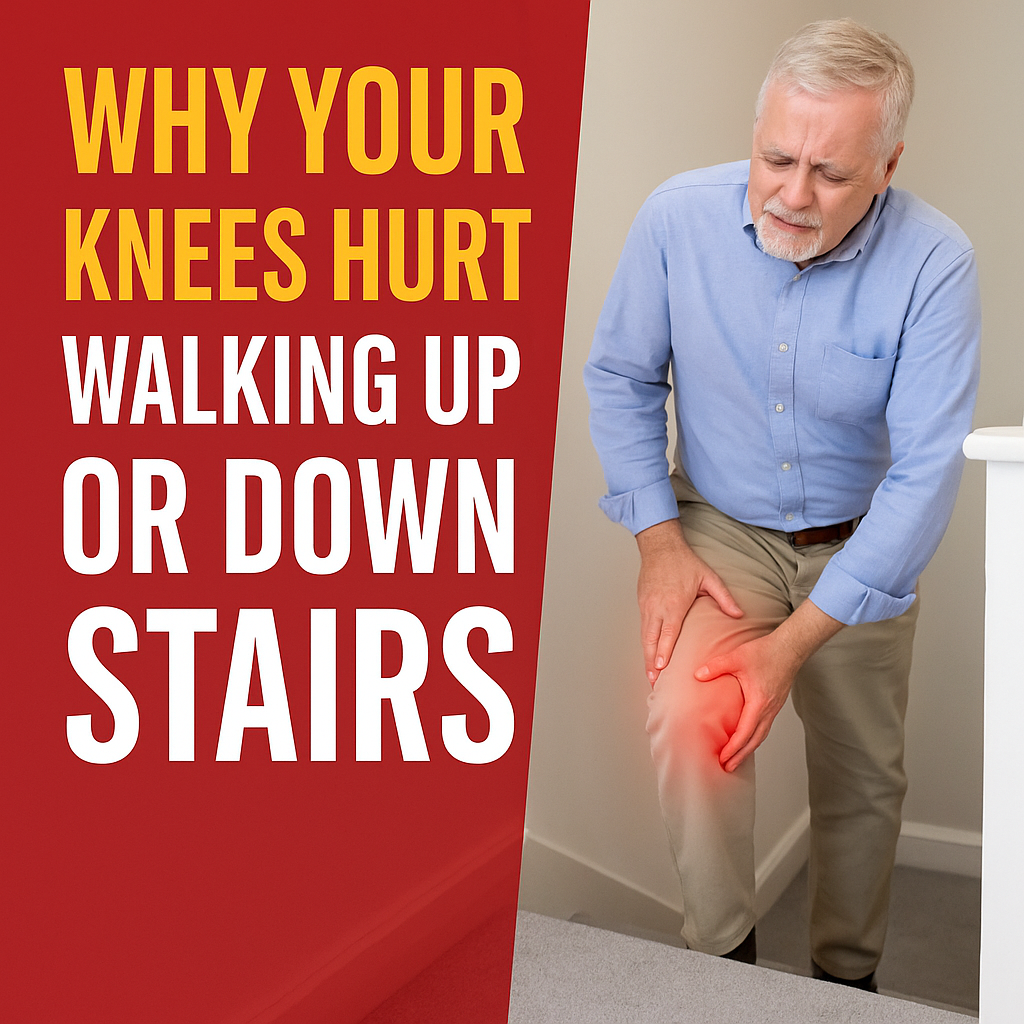
If walking on level ground feels fine but stairs cause sharp, aching, or grinding pain in your knees, you’re not imagining it as stairs put 4–6 times more pressure on the knee joint than normal walking.
For adults over 50, this extra pressure exposes underlying issues like arthritis, inflammation, or cartilage wear.
When cartilage thins, bones rub more, especially when climbing or descending.
Weak thigh muscles force the knee joint to absorb more stress.
Swelling increases pressure, causing stiffness and tightness.
The kneecap doesn’t glide smoothly, leading to sharp pain behind the kneecap.
Past meniscus or ligament injuries flare up during high-pressure movements like stairs.
Weak hips change knee alignment and overload the joint.
Descending stairs requires more control and stability. This makes the knee muscles work harder and if they’re weak or inflamed, the pain becomes more intense.
This is why people often say:
“Going down hurts worse than going up.”
You may notice:
These symptoms are common when cartilage wear or inflammation has increased.
Temporary relief doesn’t fix the cause.
Most people try:
But if symptoms keep returning, your knee likely needs targeted treatment to calm inflammation and support joint tissue.
This is exactly where non-surgical care makes a massive difference.
Our clinic specializes in reducing inflammation, improving circulation, and supporting natural joint healing — without surgery, cortisone, or downtime.
Patients report:
Most people feel improvement within a few sessions.
✔ Strengthen quadriceps with gentle leg raises
✔ Stretch hips and hamstrings
✔ Use heat before activity, ice afterward
✔ Take stairs slowly and with control
✔ Avoid high-impact workouts
✔ Maintain a healthy stride, don’t lean forward
Small changes reduce pressure on the knee joint.
Knee pain on stairs is extremely common but very treatable.
👉 Schedule your consultation today at www.painreliefbajc.com
and learn how our natural, non-surgical treatments can help you climb stairs comfortably again.