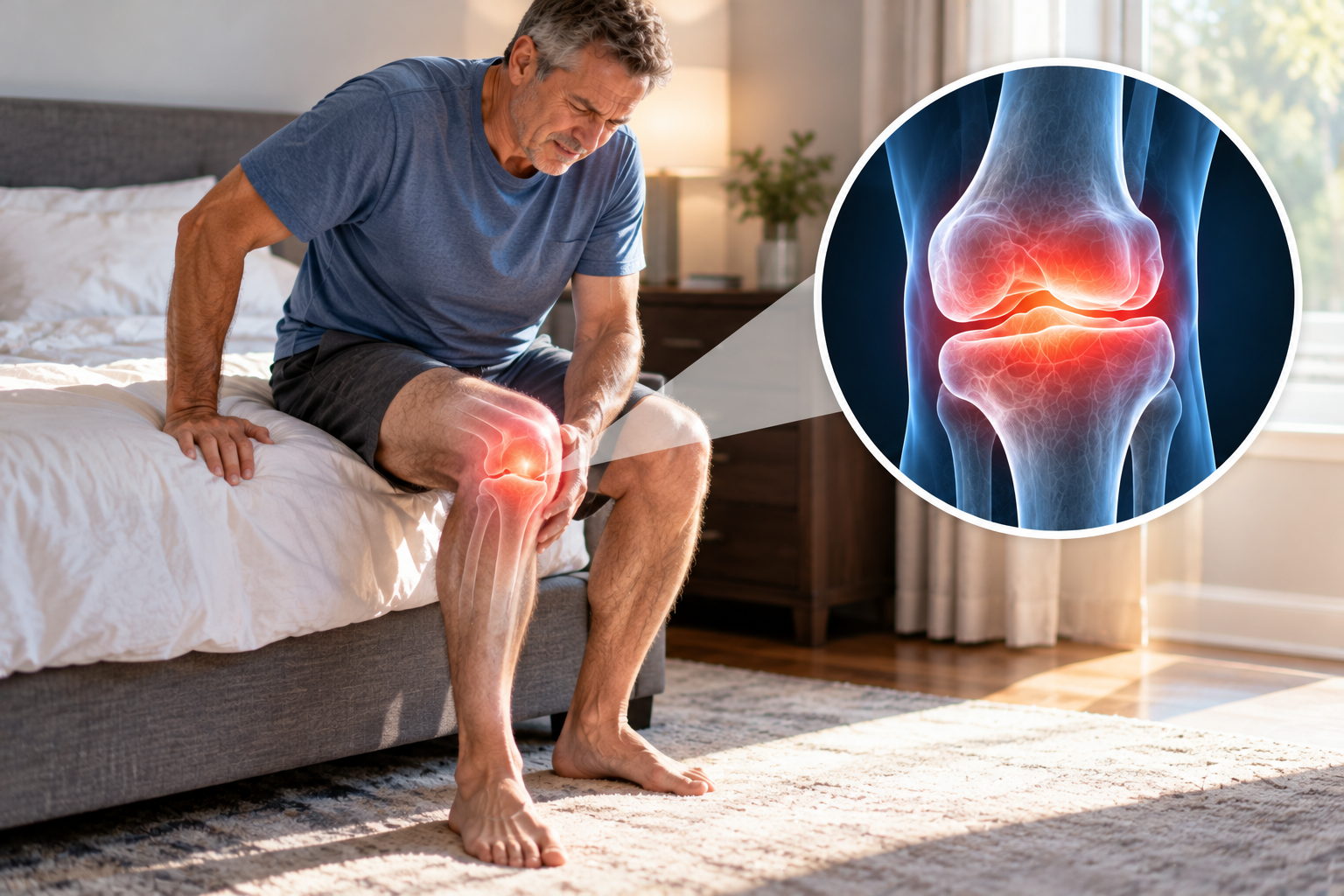
If bending your knee getting into a car, sitting down, squatting, or tying your shoes causes sharp, aching, or catching pain, it’s a sign the joint isn’t moving smoothly.
For adults 45–75, knee pain when bending is one of the earliest indicators of inflammation or joint degeneration.
It’s not “just aging” , it’s a mechanical problem inside the knee that needs attention.
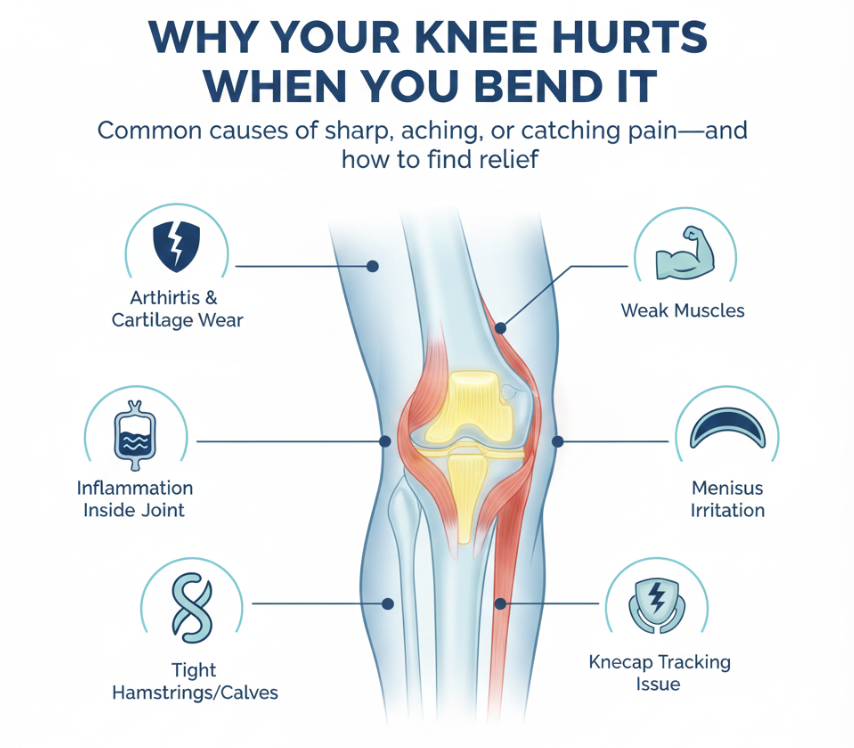
When cartilage thins or becomes rough, bending the knee increases friction.
This causes:
It’s especially noticeable after sitting or in colder weather.
The meniscus acts as a cushion and stabilizer.
When irritated or worn, bending can produce:
This is one of the most common causes of painful bending.
Swelling increases pressure and reduces smooth movement.
You may feel tightness, fullness, or difficulty straightening after bending.
Tight hamstrings, calves, or quads create extra tension when you bend your knee, causing irritation or discomfort.
If the kneecap doesn’t glide smoothly, bending becomes painful.
Symptoms often include:
A prior sprain, twist, or fall can cause long-term inflammation that resurfaces during bending.
Walking uses a small range of motion.
Bending requires:
If any of these are compromised, bending becomes painful first.
This is why many patients say:
“I can walk okay, but bending is the hard part.”
You may notice:
These indicate ongoing inflammation — and ignoring them accelerates joint wear.
These methods help temporarily but do not correct:
Real relief requires addressing the root cause.
Our approach helps:
Most patients report:
✔ Warm up the knee with gentle movement before bending
✔ Strengthen quadriceps and hip stabilizers
✔ Stretch hamstrings and calves daily
✔ Avoid deep squatting if painful
✔ Ice after increased activity
✔ Stay hydrated to support joint fluid
Small steps support long-term recovery.
If bending your knee is painful, stiff, or difficult, you don’t have to live with it.
Early care leads to faster, better results and helps prevent more serious issues down the road.