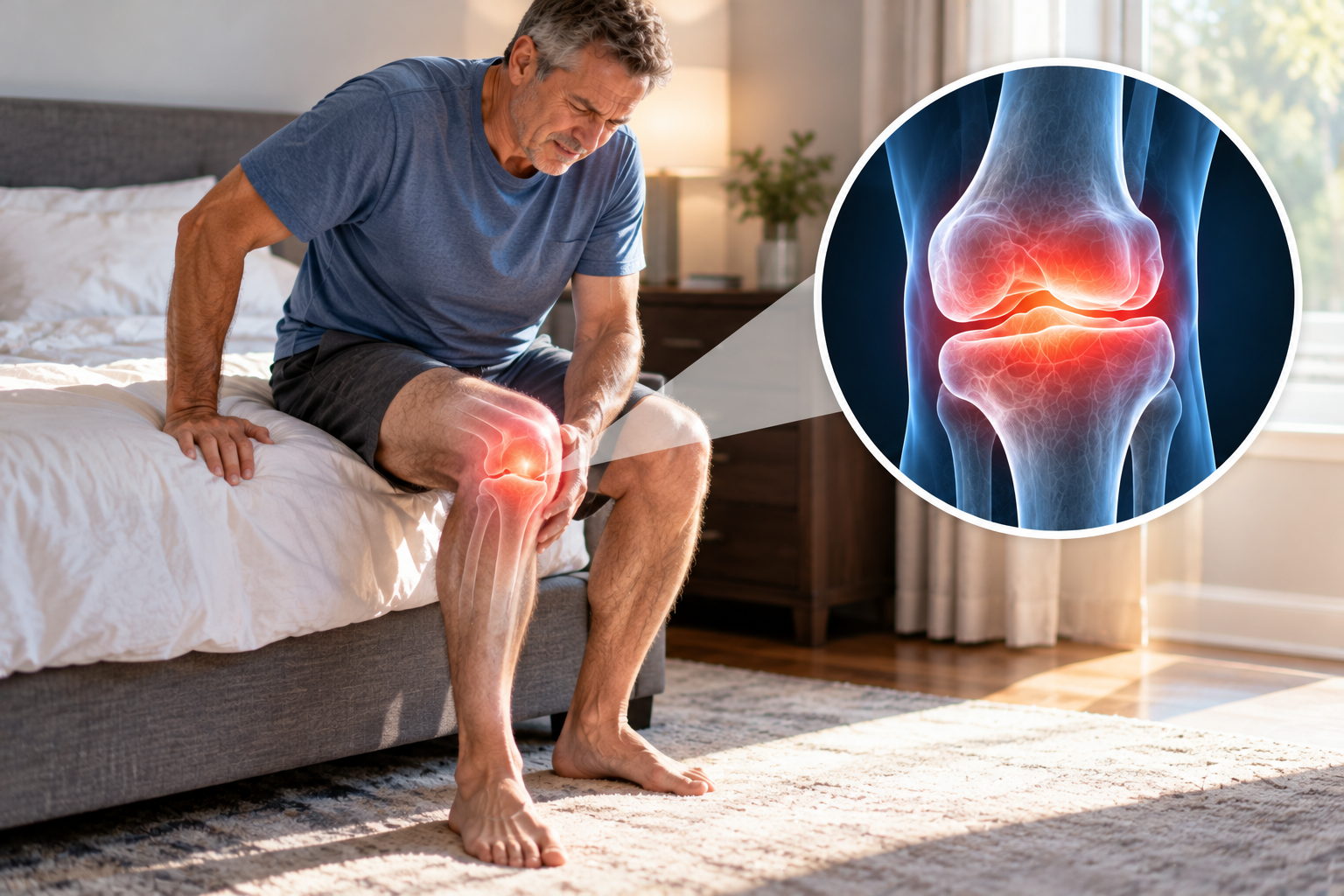
One of the most common fears people have about joint pain is this:
“If it hurts this much, something must be getting worse.”
It feels logical. Pain usually means injury, right?
But with chronic joint pain, that’s often not the case.
In many situations, pain and physical damage don’t increase at the same rate and sometimes they’re not closely related at all.
Pain is meant to protect you. When you touch something hot or twist an ankle, pain tells you to stop.
But chronic joint pain works differently.
Over time:
This can make pain feel severe even when structural damage hasn’t changed.
This surprises many patients:
If pain always equaled damage, this wouldn’t happen.
Pain is influenced by:
Not just cartilage loss.
Many flare-ups happen without new damage at all.
Common triggers include:
The joint feels worse, but the structure hasn’t necessarily changed.
When people assume pain equals damage, they often:
Ironically, this can make joints feel worse over time.
Understanding that pain doesn’t always mean harm allows people to:
Instead of asking:
“How damaged is my joint?”
A better question is:
“How well is my joint functioning right now?”
Function often improves even when imaging stays the same.
Pain is real but it isn’t always a measure of damage.
In chronic joint conditions, pain often reflects inflammation, sensitivity, and movement patterns more than structural decline.
At Buffalo Arthritis & Joint Pain Center, we help patients understand the difference so decisions are based on function and long-term joint health not fear.
👉 Pain should guide decisions, not control them.