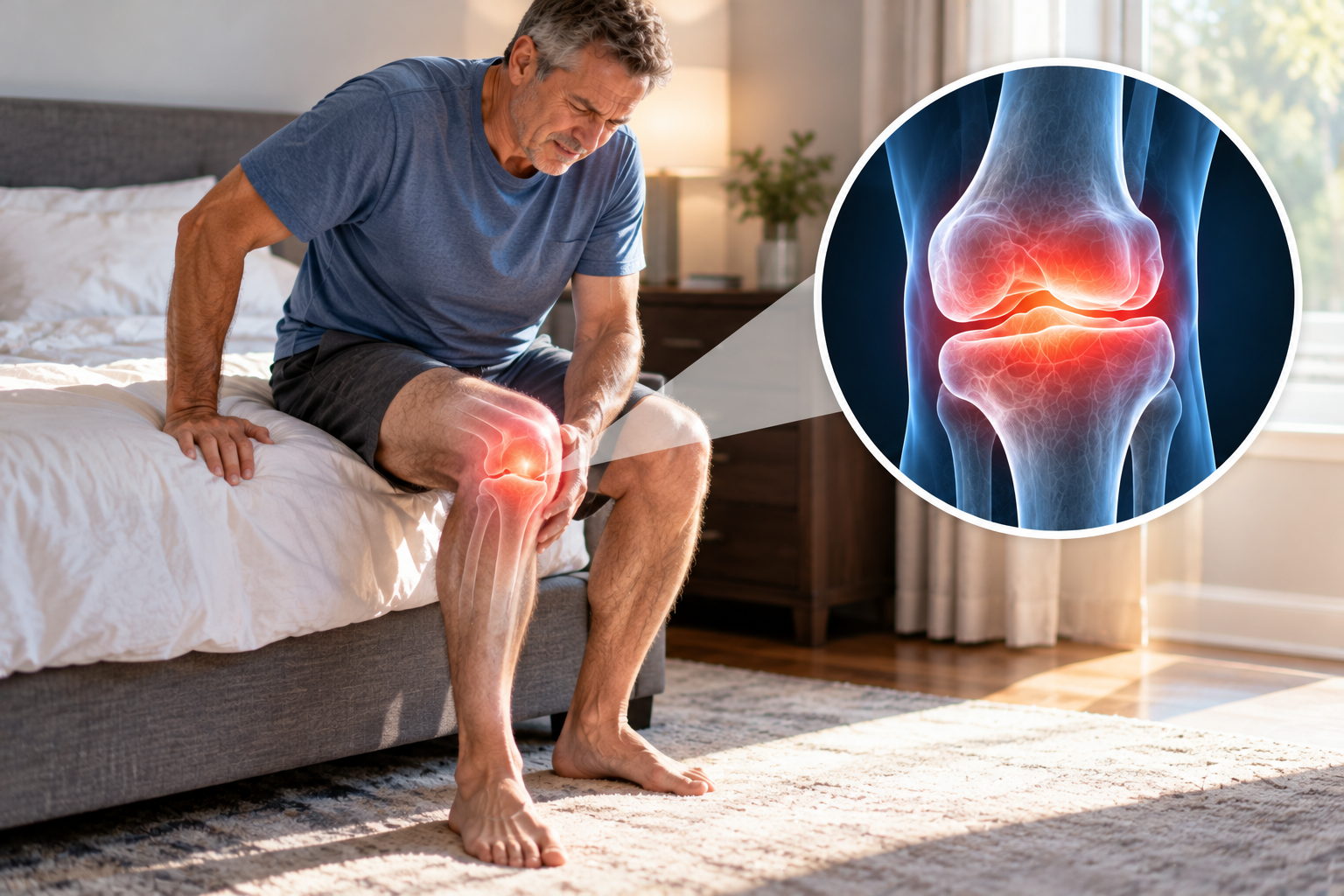
Most people think joint injuries only happen when you fall.
But during winter, many flare-ups happen without anyone ever hitting the ground.
A quick slip.
A sudden catch.
That split-second where your body tenses to stay upright.
And a few hours or days later, the pain shows up.
When you slip on snow or ice, your body reacts instantly to prevent a fall.
That reaction causes:
Even if you stay upright, your joints absorb far more force than they’re designed for — especially if they’re already arthritic or inflamed.
Near-slips often trigger pain in:
Many people don’t connect the pain to the slip because it didn’t feel serious at the time.
Adrenaline and cold temperatures can mask pain initially.
Hours later or the next morning you may notice:
This delayed response is common and often mistaken for “sleeping wrong” or “just the weather.”
Snow and ice force you to:
That constant tension reduces circulation and joint lubrication, making it harder for tissues to recover after a slip.
✔ Wear footwear with real traction
✔ Walk slowly and deliberately
✔ Keep your center of gravity over your feet
✔ Avoid rushing, especially on driveways and steps
✔ Use handrails whenever possible
Prevention matters far more in winter than people realize.
If you notice pain that:
It may be a sign the joint was already vulnerable before winter stress exposed it.
Snow often reveals underlying joint problems it doesn’t create them from scratch.
You don’t have to fall to injure a joint.
In winter, even small slips can overload joints that are already struggling, leading to lingering pain and stiffness.
At Buffalo Arthritis & Joint Pain Center, we help patients address winter-related joint pain with non-surgical treatments designed to improve joint health and resilience so snow doesn’t dictate how you live.
👉 Winter shouldn’t mean walking on eggshells.