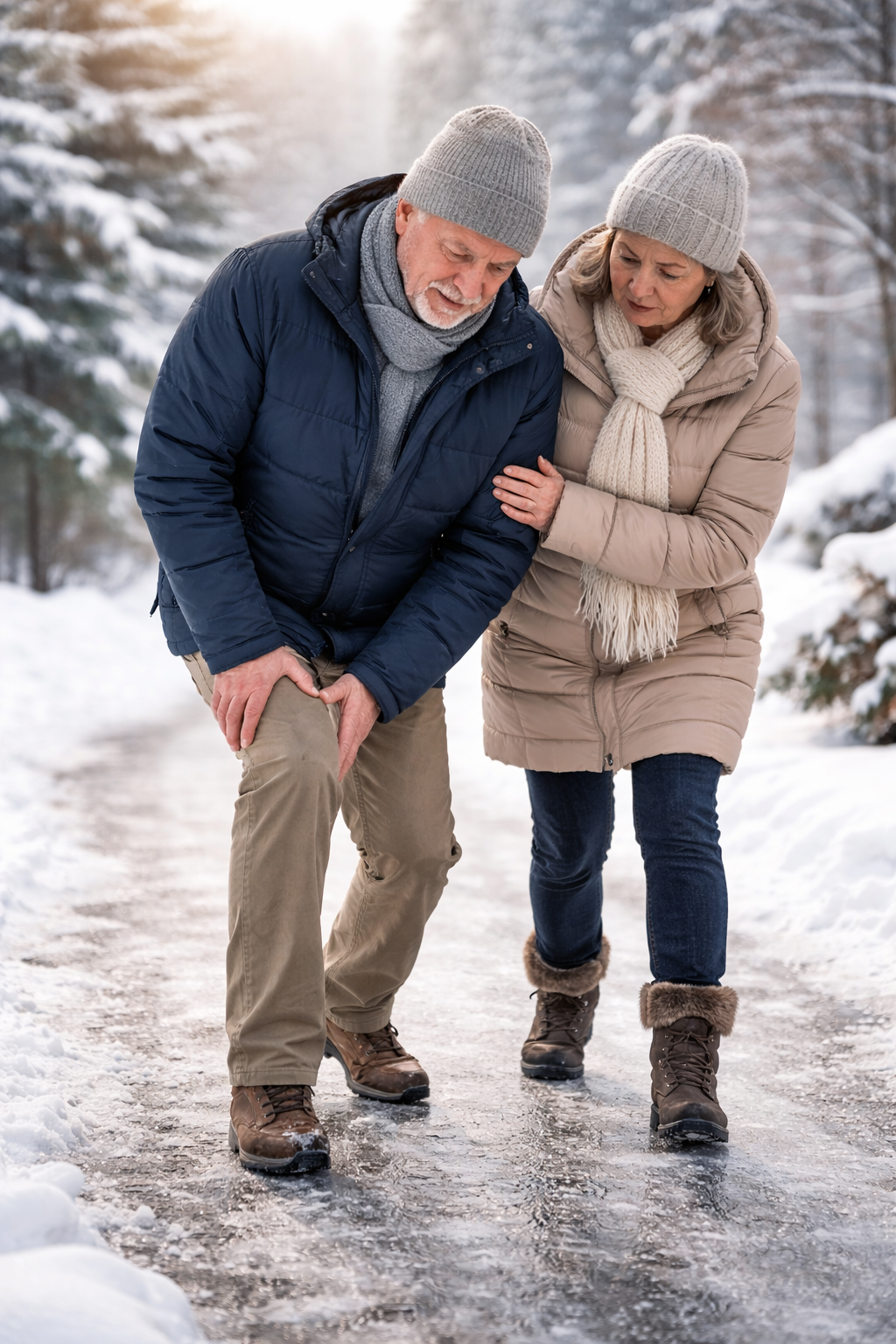
Winter changes the way we walk often without us realizing it.
Shorter steps.
Stiffer posture.
Tighter muscles.
Constant caution to avoid slipping.
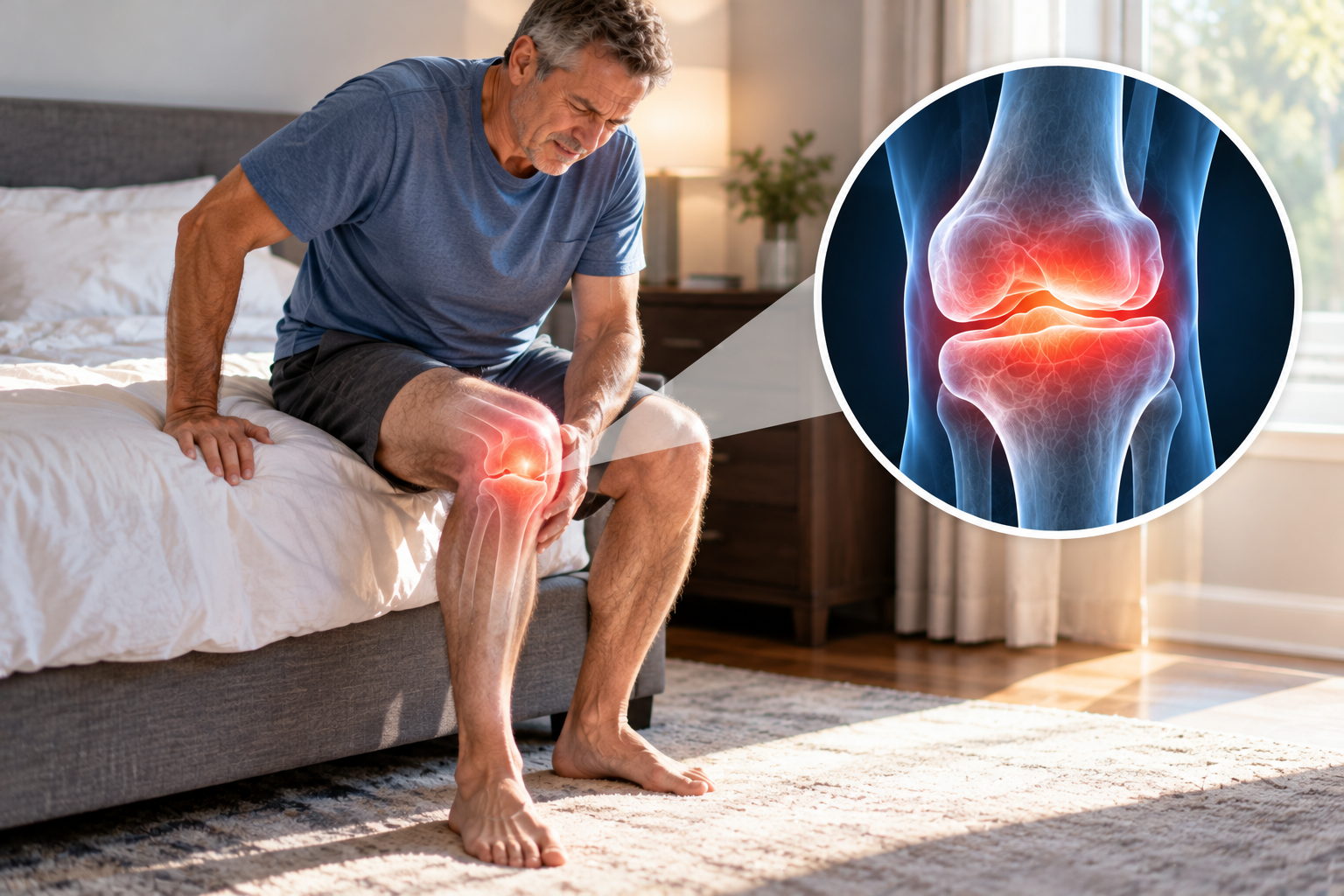
Even when you stay upright, these subtle changes can place extra stress on your knees, especially if you already deal with arthritis or chronic knee pain.
When sidewalks and driveways are icy or snow-covered, your body naturally adapts to stay safe:
This “protective walking” helps prevent falls but it also:
Over time, that added stress adds up.
For people with sensitive or arthritic knees, winter walking can trigger:
Many people assume this pain comes from cold weather alone, but it’s often the combination of cold + altered movement that causes flare-ups.
Cold temperatures reduce circulation, which means:
So even small walks can feel more taxing in winter than they do in warmer months.
✔ Wear footwear with good traction to reduce muscle tension
✔ Walk slower with slightly longer, controlled steps when possible
✔ Avoid locking your knees or staying overly crouched
✔ Warm up before walks, even briefly
✔ Take breaks instead of pushing through discomfort
Small adjustments can significantly reduce knee strain.
If winter walking consistently causes:
It may be a sign the knee is already struggling to handle normal load and winter conditions are simply exposing it.
Winter doesn’t have to mean avoiding walks or living with knee pain.
Understanding how cold and snow change your movement can help you protect your knees and if pain persists, it may be time to address knee health more proactively instead of waiting for spring.
At Buffalo Arthritis & Joint Pain Center, we help patients improve knee comfort and mobility with non-surgical treatments designed to support joint function year-round.
👉 You should be able to walk confidently, even in winter.